Tests whether AI-powered features execute injected instructions by manipulating inputs across user-facing and backend prompts. Findings show the injection path and model response.
Dynamic Testing
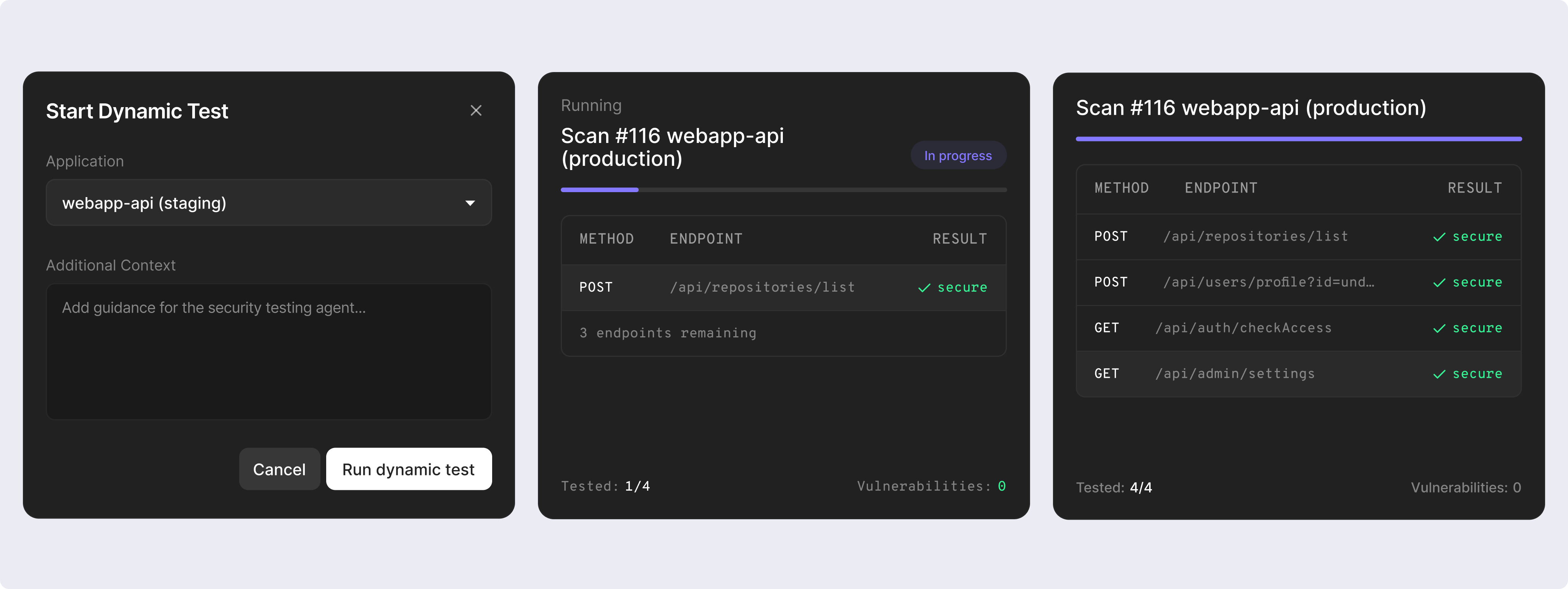
Deploy dynamic testing in three ways. Discover vulnerabilities in your running applications, confirm which findings are exploitable at runtime, and verify that every fix resolves the issue after merge.
Find exploitable vulnerabilities in production
-
.svg)
-
.svg)
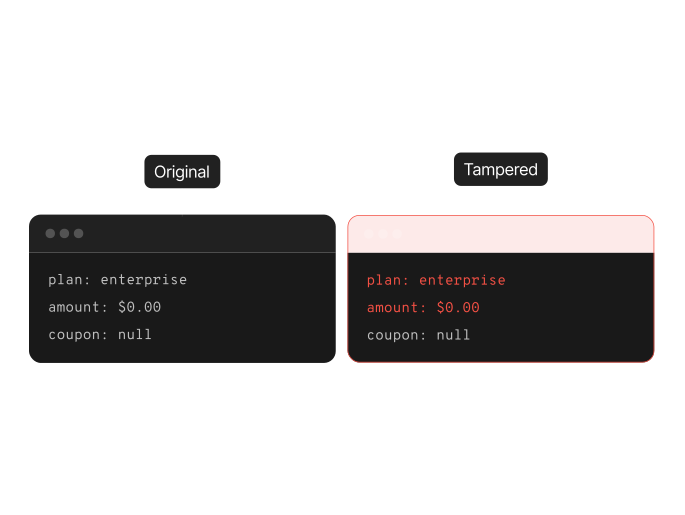
Tests whether users can access data that doesn’t belong to them by modifying object identifiers in real requests and checking for unauthorized responses.
-
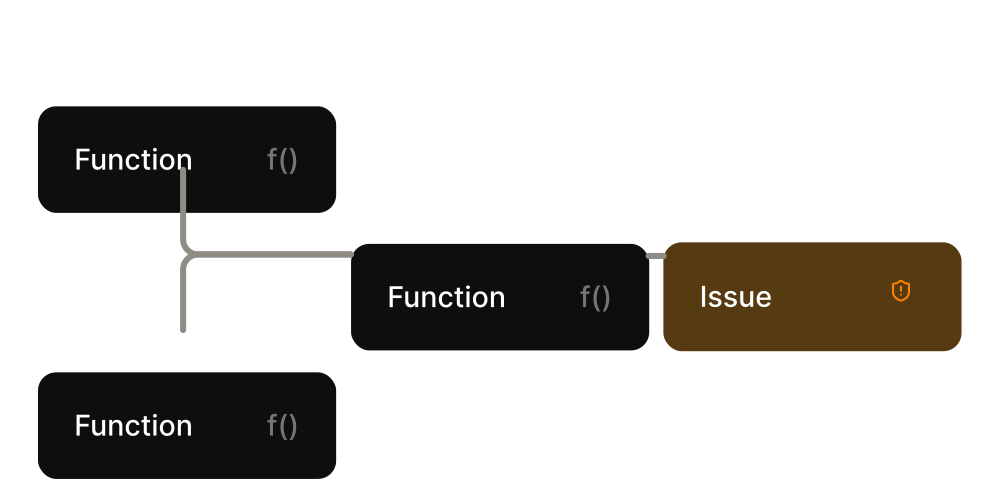
depthfirst maps how weak points connect through your application’s data flows and control logic to surface exploitable vulnerability chains.
The ultimate production test. Find which vulnerabilities attackers can exploit in your running application. Prove each finding with real attack evidence and confirm every fix closes the issue.
Discover vulnerabilities in running applications
AI agents authenticate, navigate UI and APIs, and chain requests to execute real attack paths against your running application.
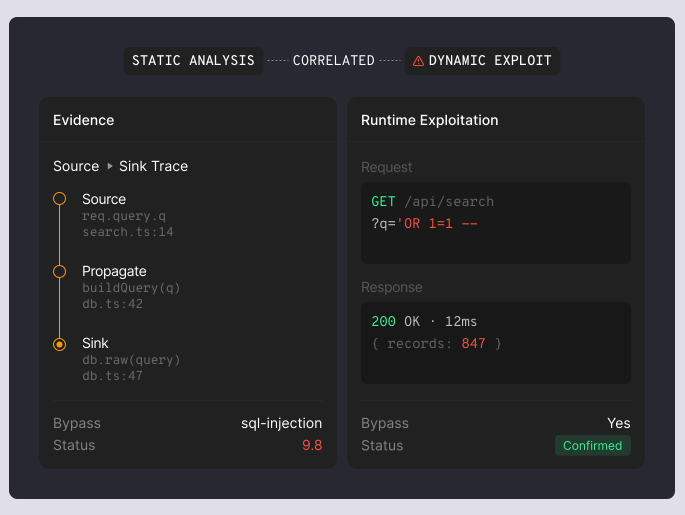
Confirm Every Finding With Proof of Exploitability
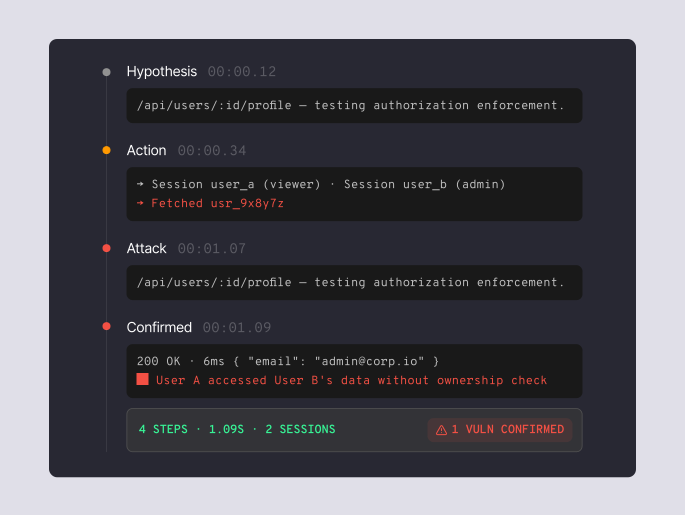
Findings from code, supply chain, secrets, and infrastructure are tested at runtime. Confirmed vulnerabilities include a unified timeline of static evidence and dynamic exploitation.
Know Fixes Actually Work
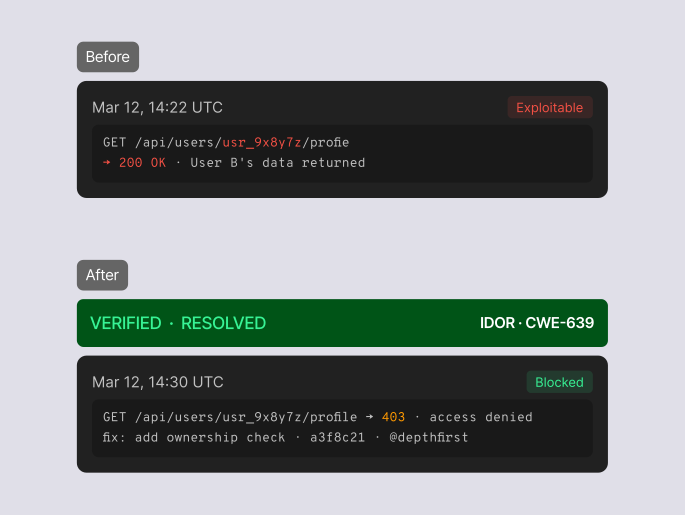
depthfirst replays each attack after a fix. A vulnerability is resolved only when the same attack fails in your running application.
Designed for flexibility

Testing modes
Run white-box tests informed by full code context, grey-box tests with partial access, or black-box tests against any URL or API endpoint.

Continuous validation
Dynamic tests re-run automatically after fixes merge, confirming that each vulnerability is resolved at runtime, not just patched in code.

SAST-to-DAST linking
Static findings are linked to dynamic exploitation attempts in a single timeline, showing both the code-level evidence and the runtime result.

Authentication support
Support a wide range of authentication methods and test across multiple scoped roles to reflect real user access.
Goodbye siloed security. depthfirst uses the same core technology to secure every layer of your system.
Secrets & sensitive data
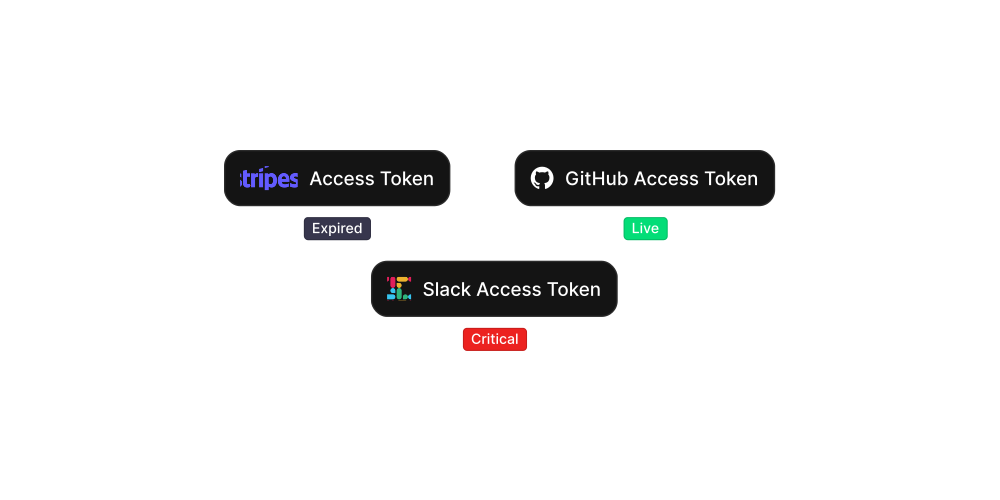
Detect and validate credentials across your codebase, CI/CD pipelines, and runtime environments.
Code
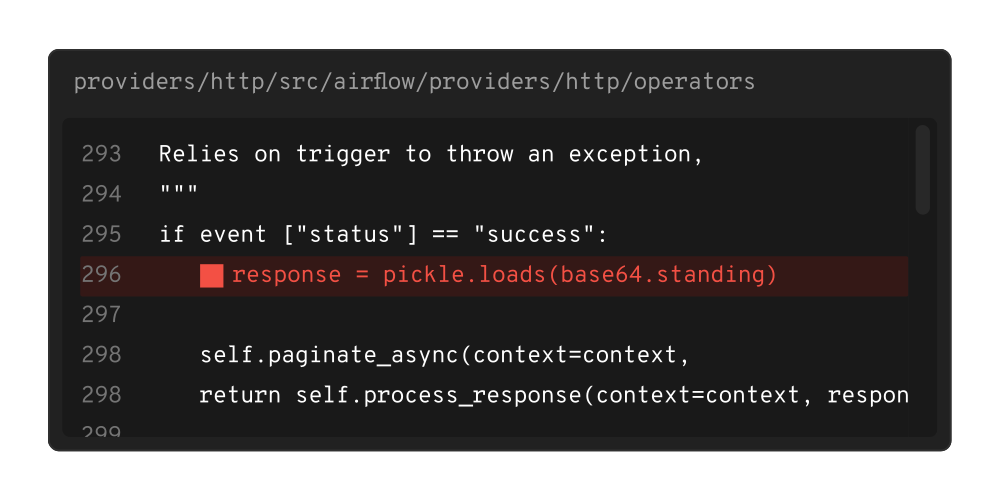
Find real vulnerabilities by tracing business logic, data flows, and cross-service interactions across your codebase.
Supply chain
Trace risk through your full dependency tree and surface only the vulnerabilities with a real execution path to them.